
Who it’s for
One place, and a reason for everyone to open it
OpsNexa Online is for companies running their own software without a dedicated platform team, from a handful of engineers to a few hundred people. Here’s what each person gets.
Founders, CTOs and engineering managers
See the whole picture without asking around
“Are we in good shape? What would hurt us? Where is the money going?”
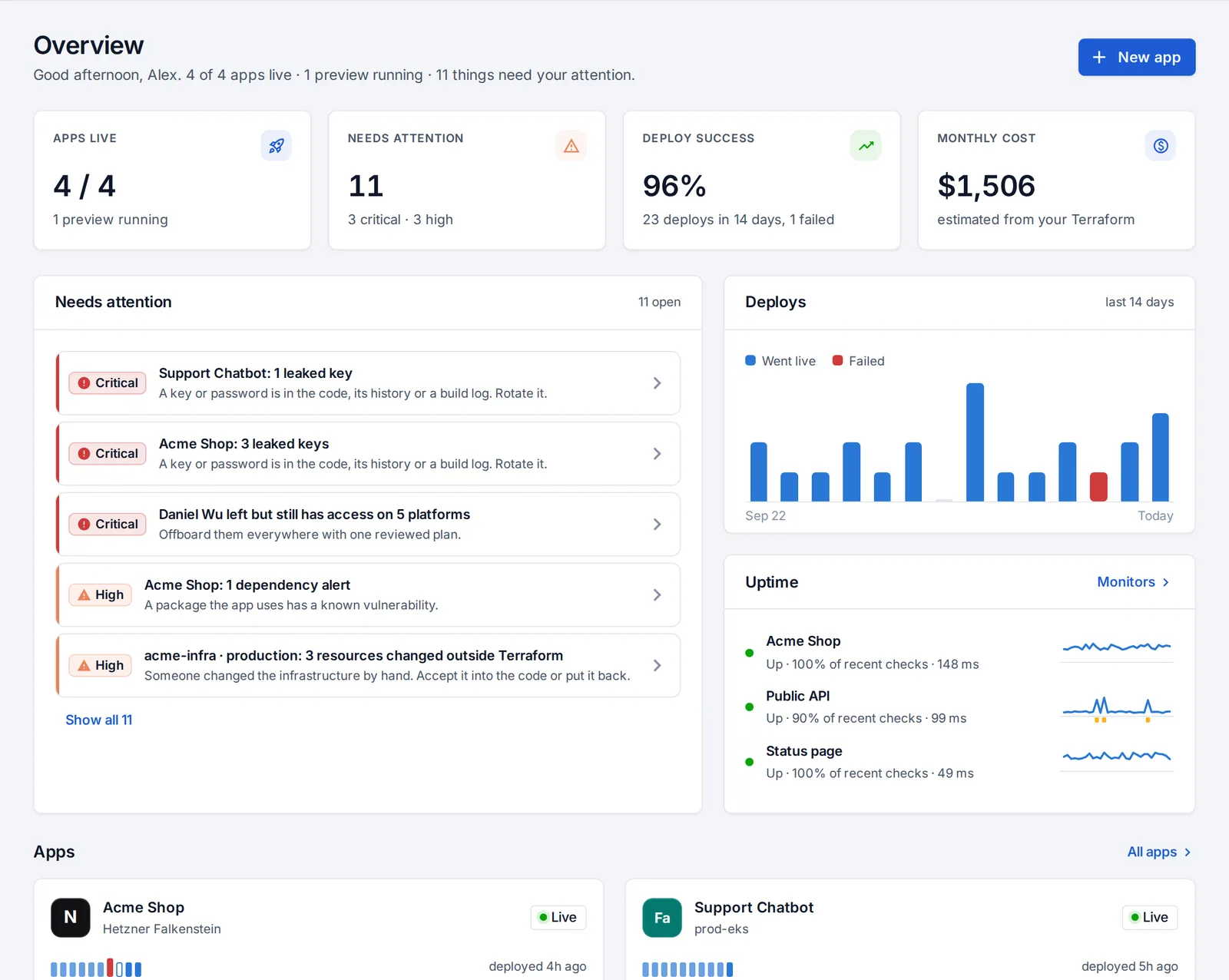
- Home answers it: apps live, what needs attention, deploys and uptime, in one screen.
- Less depends on one person: deploys, backups and fixes live in OpsNexa Online, not in someone’s head.
- A weekly summary every Monday: new and fixed risks, deploys, incidents and spend.
- Scorecards grade every service on nine basics, with one number to watch over time.
- Due diligence and audits stop being a fire drill: evidence is collected as you work.
Developers
Ship without filing a ticket
“I just want my branch online so someone can look at it.”
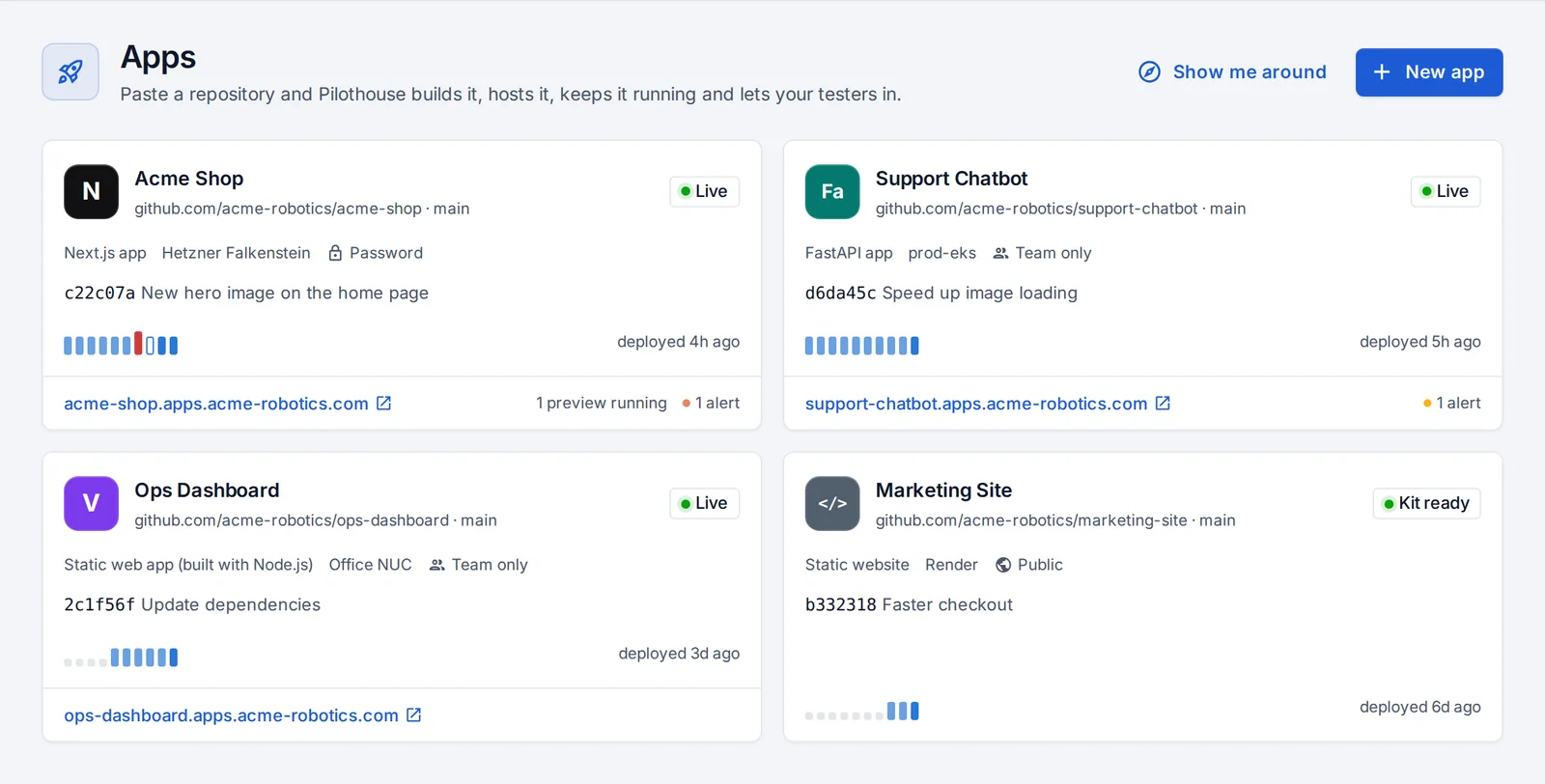
- Deploy from a repository link, with a preview for every branch.
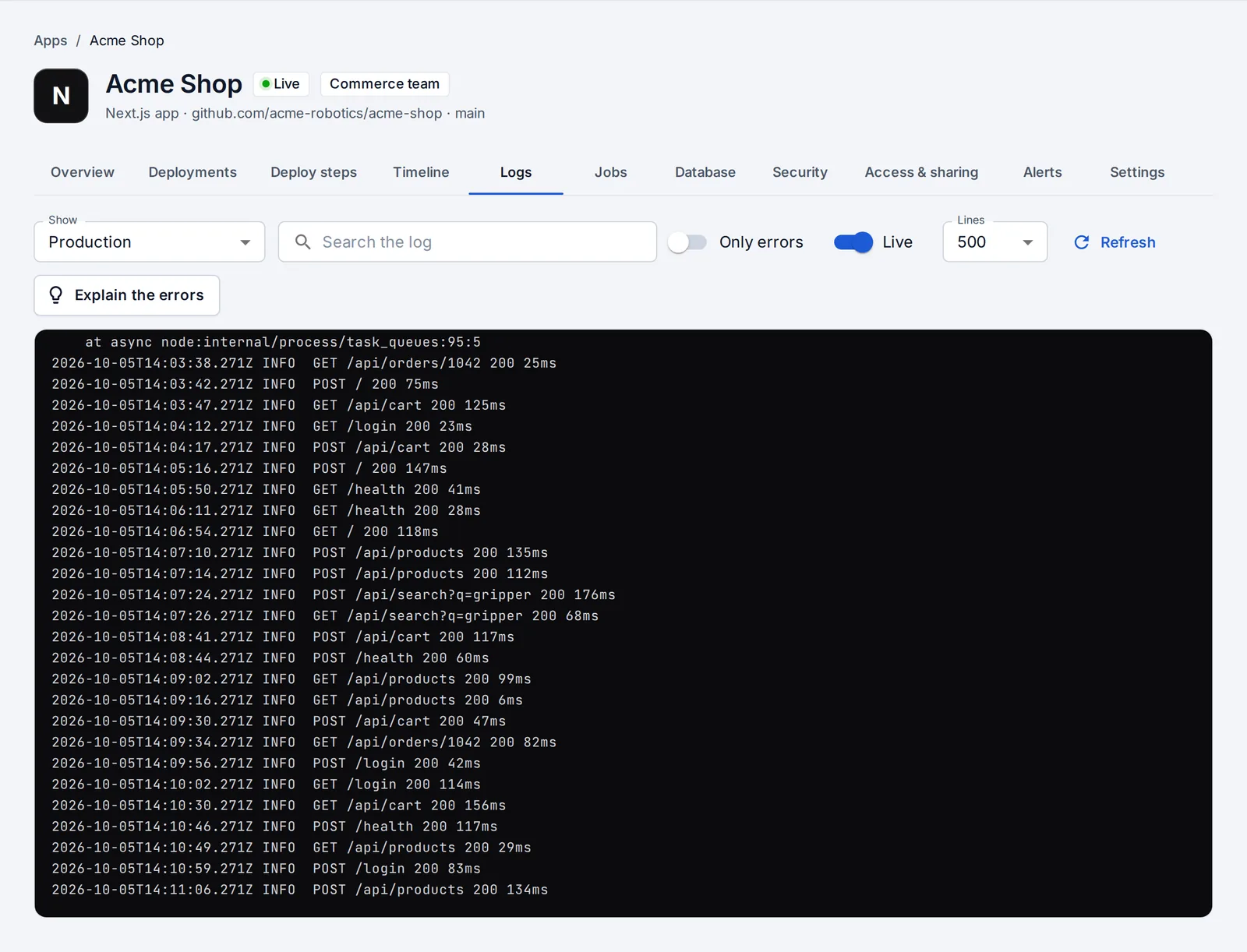
- Logs, health and crashes explained in plain words, with the file and line.
- Roll back in a click when a release goes wrong.
- No server access needed: settings, databases and jobs from the app’s page.
- From your editor: ask Claude Code, Cursor or VS Code to deploy or find out why an app is down.
The person who “does DevOps”
Fewer scripts to keep alive, fewer 2 a.m. guesses
“Everything works, as long as I’m around to fix it.”
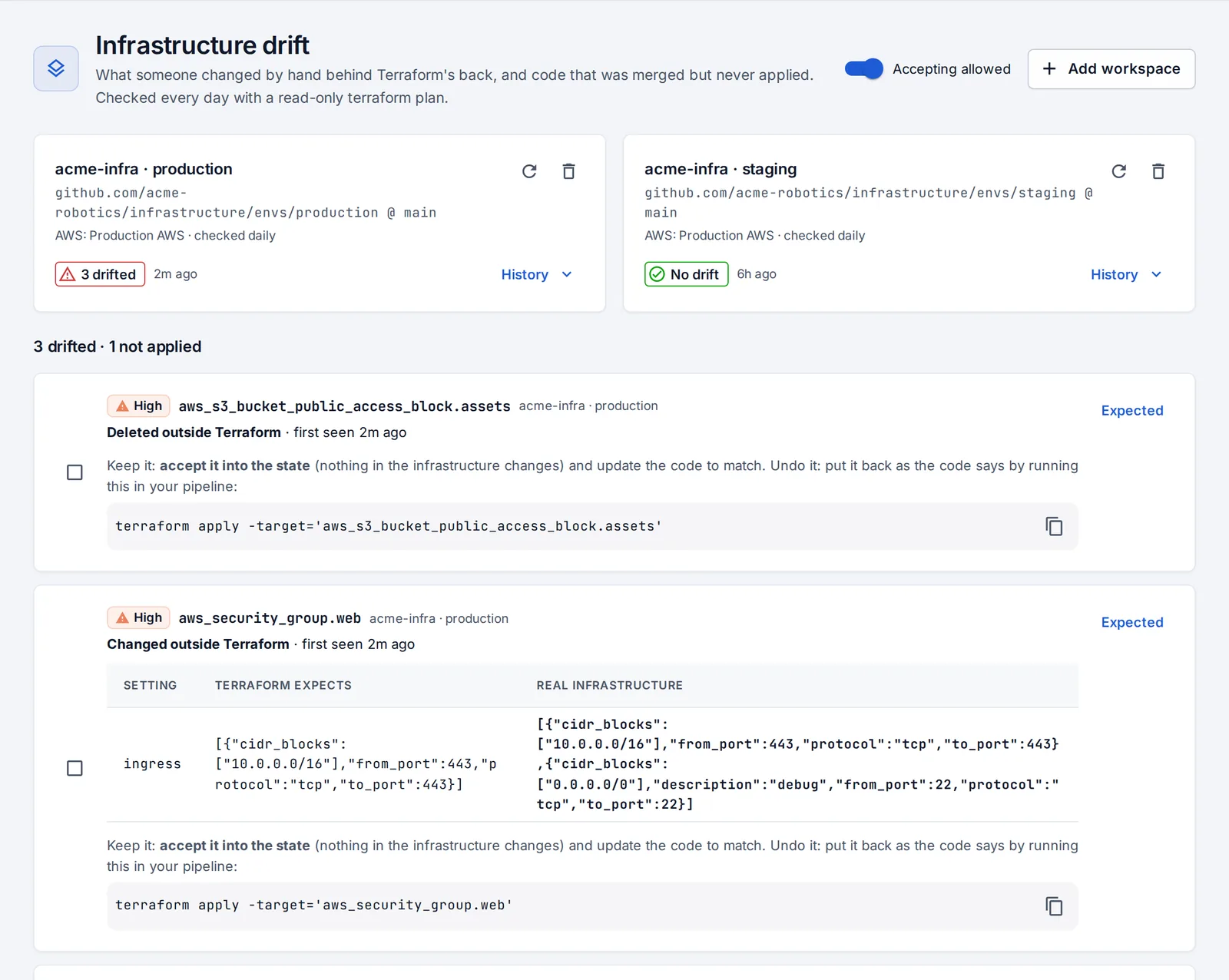
- What changed? One timeline across apps, settings, databases, servers and access, likely cause first.
- Backups proven by restore drills, not hoped for.
- Drift and waste found daily: changes made by hand, and things that cost money and do nothing.
- Your code checked on every push, with fixes as pull requests and shared code upgraded weekly.
- Private networks reached through a small agent that only connects out.
Security and compliance
Access, leaks and evidence, without chasing people
“Who still has access, and can we prove it to the auditor?”
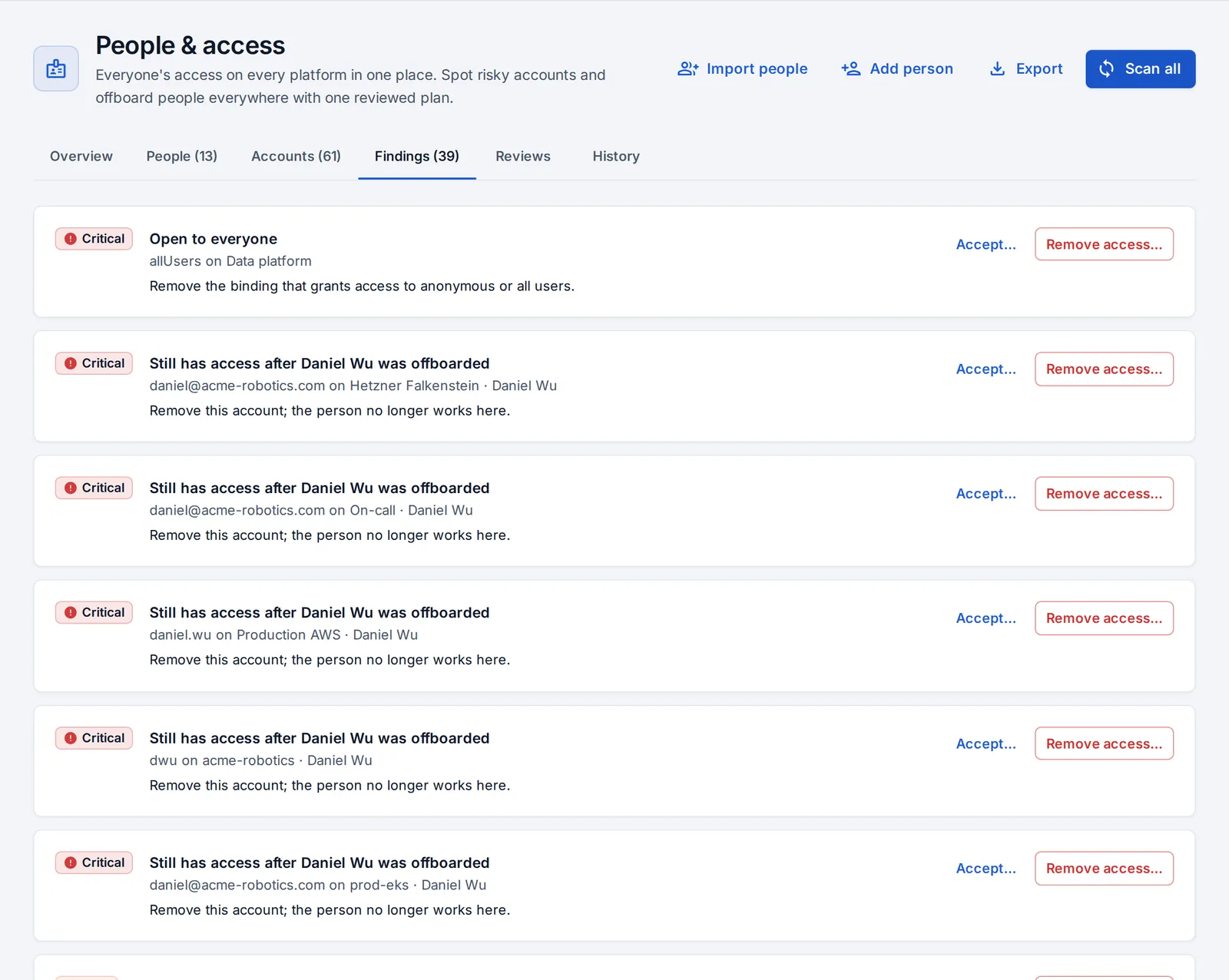
- Every account on every platform, matched to a person, scanned daily.
- Offboarding in one plan, reviewed and logged, with undo.
- Access reviews on a schedule, with a printable report.
- Leaked keys found in code, history and logs, and rotated without breaking apps.
- SOC 2 and CIS evidence and an audit log of every change, exportable as CSV.
Testers, product and everyone else
Every app and every preview, without breaking anything
“Which link is the new version? And did this break today or last week?”
- The tester role opens every app and preview and changes nothing.
- Timelines show which deploy a problem started after.
- Sandbox accounts let anyone try deploying on servers you set aside; their apps clean themselves up.
- Share links for clients and outside testers, no account needed, revocable any time.
Finance
What the cloud really costs, and what can go
“Why did the bill go up, and is any of it waste?”
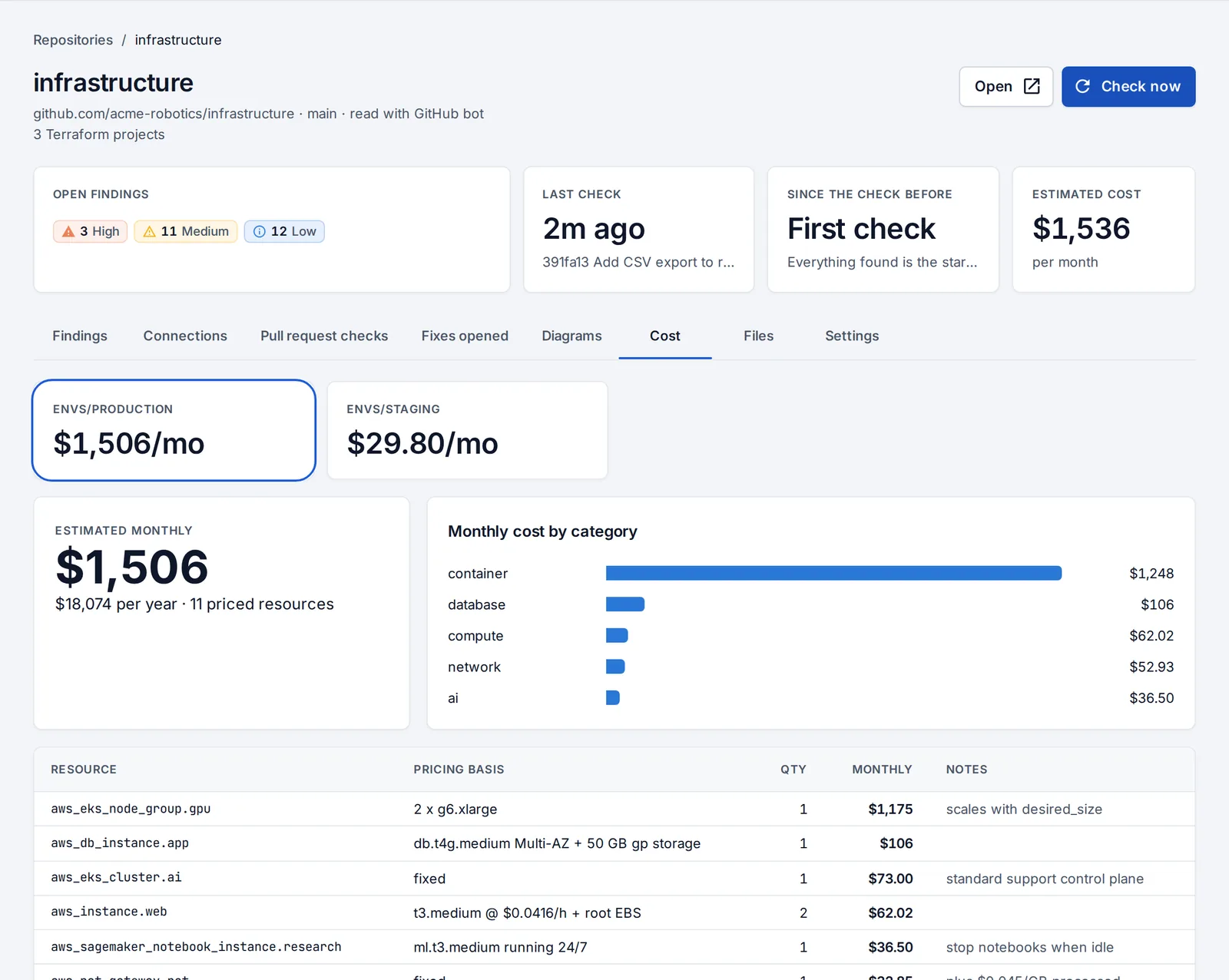
- Actual spend next to the estimate for AWS, Google Cloud and Azure, per service.
- Cost on every pull request: what a change adds to the monthly bill, before it merges.
- Cloud waste with a monthly cost for each item, cleaned up safely.
- Predictable seats: admins set a limit, and OpsNexa Online refuses new people beyond it.
Bring the whole team
Invite people with the role they need. Testers look, developers ship, admins steer.